
Chris Martin
Founder, Digital Rebel Marketing
AI has made decent marketing creative cheap, fast, and available to almost everyone. That is useful, but it may also be making a lot of what we create easier to ignore.
I have been guilty of it myself. I have opened ChatGPT, described the social media graphic I needed, adjusted the prompt a few times, and ended up with something that looked pretty good. What might once have taken an hour or two of design work can now be created in minutes, without hunting through stock photos, digging through Canva templates, or spending half the afternoon deciding whether the headline should move three pixels to the left.
That is genuinely useful technology, particularly for small businesses and organizations that do not have a full-time designer sitting down the hall.
It is also creating a new problem.
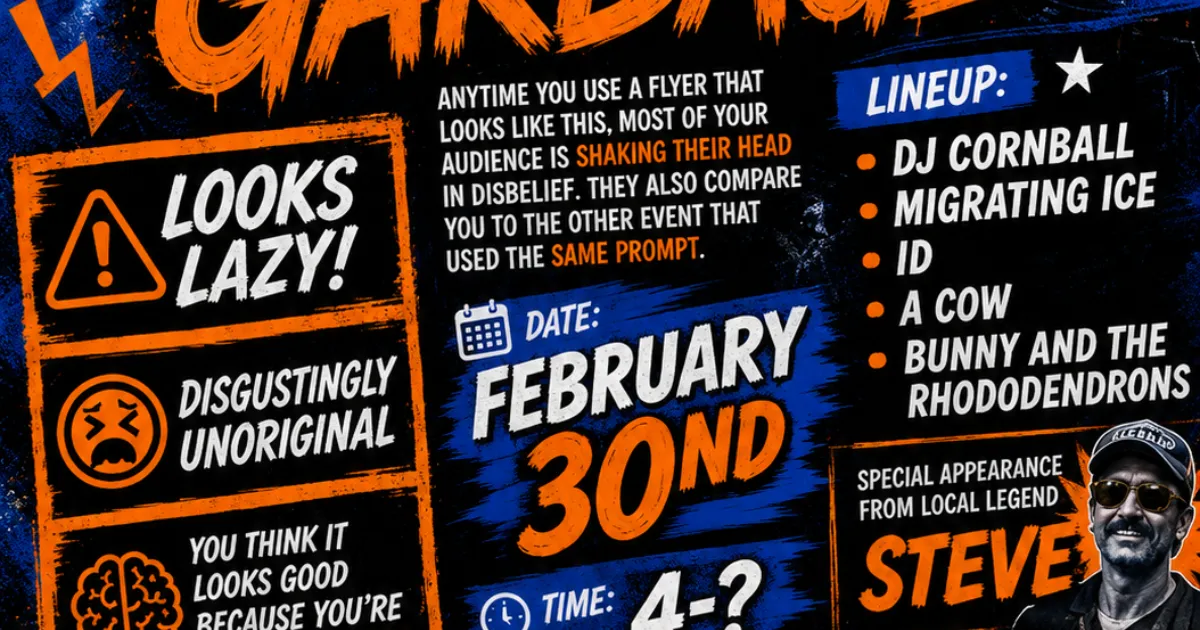
Take the ridiculous flyer at the top of this article. It announces, in enormous letters, that “YOUR FLYER LOOKS LIKE GARBAGE.” It is crowded with arrows, illustrations, competing typefaces, fake event details, giant headlines, tiny disclaimers, and even a can of soup. The whole thing is intentionally absurd, but the joke works because the underlying problem is familiar.
We are reaching a point where marketing creative can be technically impressive, visually polished, and completely forgettable at the same time.
We Have Made “Pretty Good” Almost Free
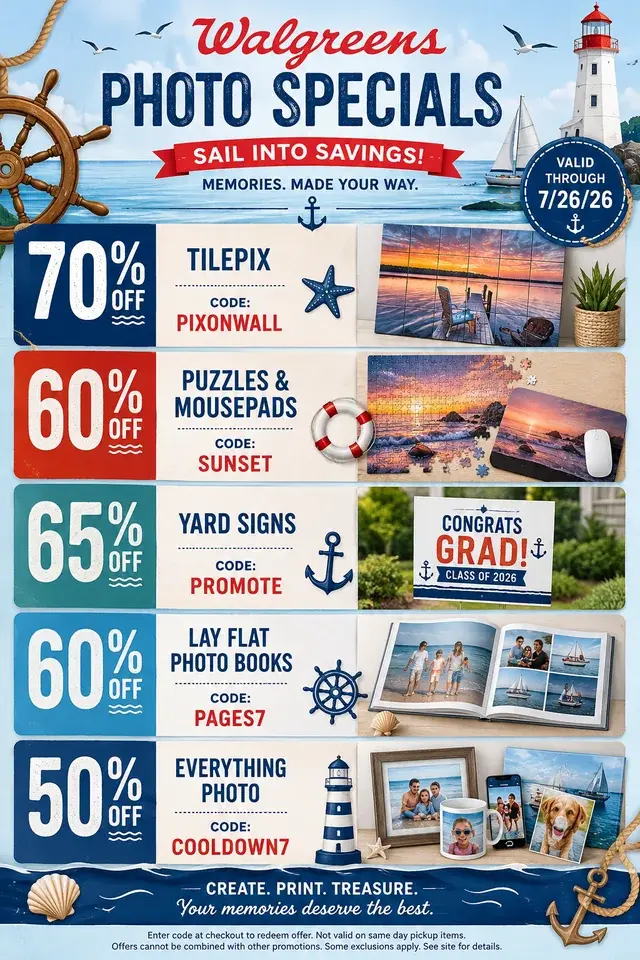
Generative AI has dramatically lowered the amount of effort required to create competent marketing material. A business owner can now generate event graphics, promotional images, social media posts, advertisements, illustrations, and even videos without having much traditional design experience.
That is a significant change.
The problem, of course, is that everyone else has access to the same tools. Your competitors have them. The restaurant down the street has them. The insurance agent has them. The local nonprofit has them. The roofing company has them. The consultant who decided last Tuesday to become a “thought leader” has them.
We have not simply democratized design. In many cases, we have democratized the same design.
The tools are trained on enormous amounts of existing creative work, and users tend to ask them for many of the same things: professional, bold, modern, eye-catching, cinematic, engaging, dynamic, high-energy, or scroll-stopping. The result is often attractive, but after enough people use similar prompts and similar visual conventions, the work begins to converge.
The images are different, but the feeling is the same.
We Are Developing a New Kind of Banner Blindness
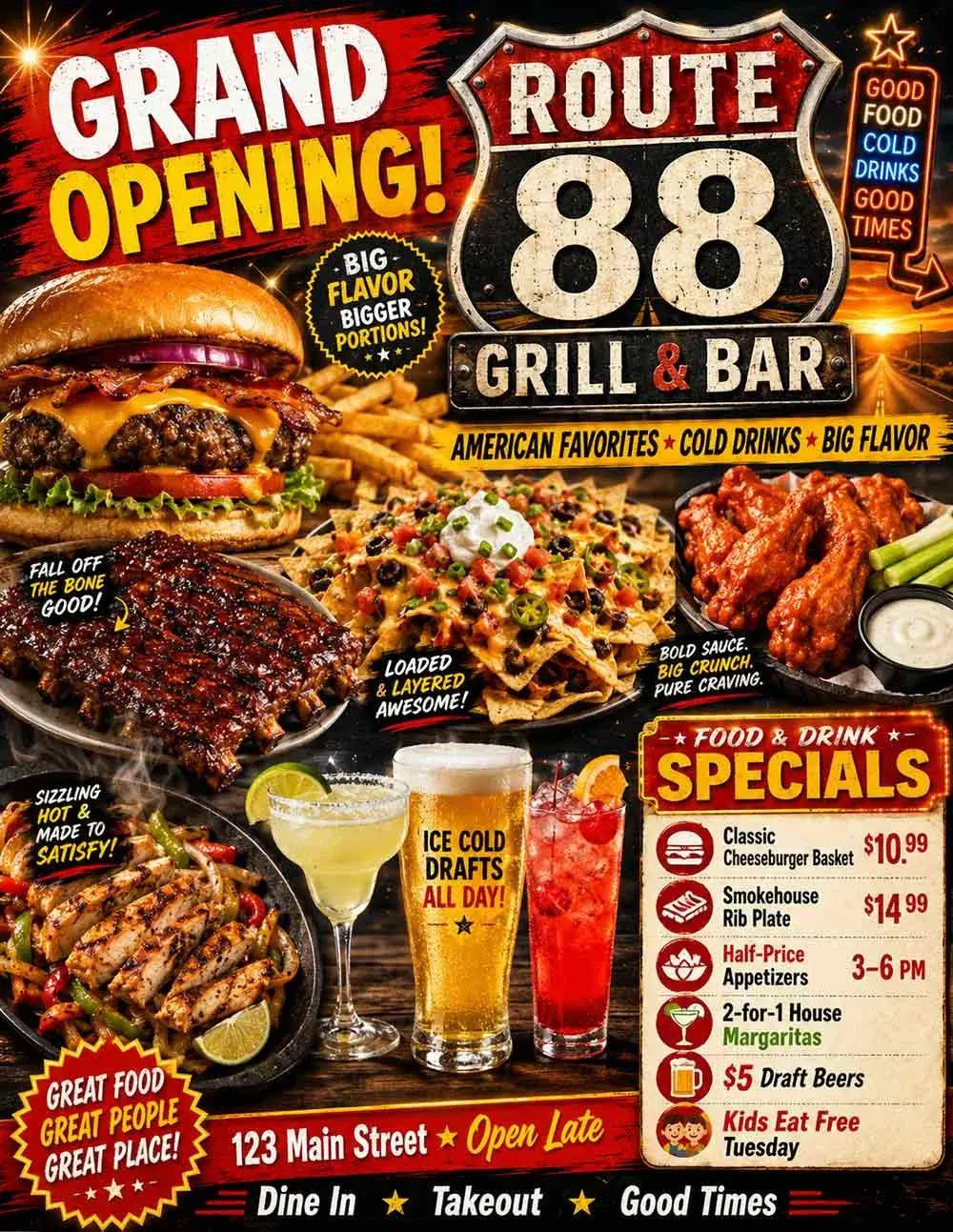
Marketing has seen this before.
People learned to ignore banner ads because banner ads started looking like banner ads. They learned to scroll past generic stock photography because every business seemed to feature the same suspiciously cheerful group of professionals gathered around the same laptop. Social media templates became easy to recognize because thousands of businesses were using the same layouts with different logos.
AI-generated creative is beginning to develop its own visual language, and audiences are learning to recognize it.
There is often dramatic lighting, oversized typography, highly detailed backgrounds, glowing edges, exaggerated texture, cinematic contrast, and people who appear to have been genetically engineered to never experience pores. Even when none of those things is inherently bad, the combination becomes familiar.
Once the audience stops seeing your individual piece of creative and begins seeing it as another example of “AI marketing stuff,” you have a problem.
The issue is not necessarily that AI-generated creative looks bad. Increasingly, it does not. The issue is that visual competence alone is becoming less valuable because visual competence is becoming easier to produce.
Looking Good Is Not the Same as Being Memorable
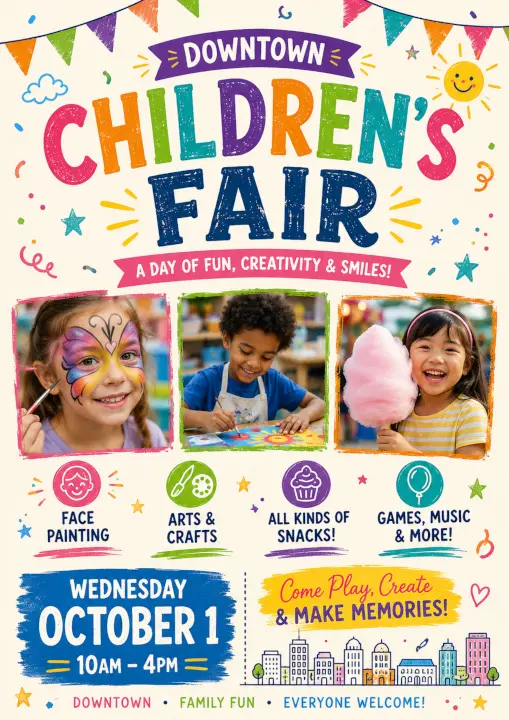
For years, businesses paid designers, agencies, photographers, videographers, and other creative professionals in part because producing polished work required specialized skill, time, and equipment.
AI changes that equation.
A business can now produce something that looks reasonably professional in a fraction of the time and at a fraction of the cost. That is a real benefit, and I am not interested in pretending otherwise.
However, when everyone can produce polished work, polish stops being much of a differentiator.
The more interesting question becomes whether the creative has any connection to the business behind it. Does it reflect the company's personality? Does it communicate an actual idea? Does it show something real? Does it give the audience a reason to remember who produced it?
This is where a lot of AI-assisted marketing begins to fall apart.
The output may be visually impressive, but it often lacks specificity. It looks like something a business might publish rather than something this particular business would publish.
That distinction matters.
Take the Logo Off and See What Happens
There is a simple test I think more businesses should apply to their marketing.
Remove the logo from the graphic.
Could the same piece belong to your biggest competitor? Could it belong to five competitors? Could someone swap three words and use it for an entirely different industry?
If the answer is yes, you may have produced content, but I am not sure you have produced much of a brand.
A brand is more than a color palette, a logo, or a collection of visual rules. It is the accumulation of recognizable choices. It is how a company talks, what it pays attention to, what it believes, what it notices, what it refuses to say, and what customers come to expect from it.
AI can assist with those choices, but it cannot make them for you unless you are comfortable allowing your brand to drift toward the statistical middle.
That is one of the fundamental characteristics of generative AI. It is extraordinarily good at creating plausible versions of things that already exist. That makes it useful, but it also creates a natural pull toward the familiar.
The familiar feels safe. It also has a habit of disappearing into the background.
More Content Does Not Create More Attention
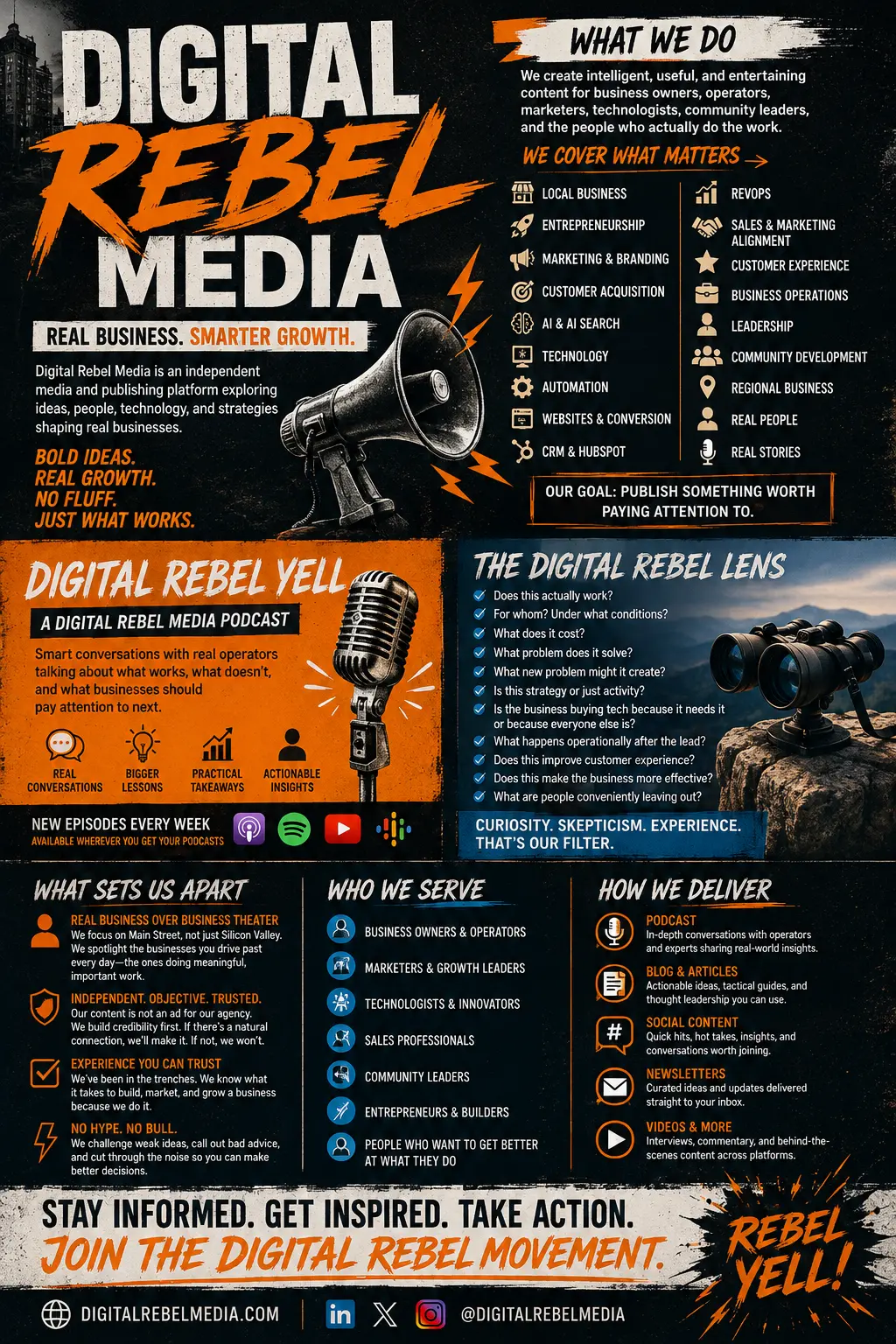
AI has also removed many of the practical limits on content production.
A small business can now create multiple social graphics in the time it once took to make one. Marketing teams can generate dozens of variations, write multiple captions, resize creative for every platform, and fill a monthly content calendar faster than ever.
The problem is that nobody gave the audience any additional hours in the day.
We have increased the supply of content without increasing the supply of attention.
That means producing more is not automatically an advantage. In fact, flooding a company's channels with generic material may make the problem worse. Every additional post becomes one more thing asking the customer to stop scrolling, pay attention, understand the message, and remember the business.
If the content is not distinctive, useful, entertaining, relevant, or genuinely interesting, the increased volume simply creates more opportunities to be ignored.
Congratulations on the impressions. Did anybody actually care?
That is the question businesses should be asking.
AI Is Not the Problem
None of this is an argument for abandoning AI-generated creative.
I use AI, and I expect to keep using it. The technology is exceptionally useful for brainstorming concepts, exploring layouts, developing variations, generating rough compositions, resizing creative, cleaning up copy, creating initial drafts, and eliminating tedious production work.
For a small business with limited staff and limited marketing resources, those capabilities can be especially valuable.
The mistake is treating the first acceptable AI output as finished work.
AI can get you to a starting point faster. It can give you options that would have taken hours to develop manually. It can help a designer work faster, help a business owner explore ideas, and help a marketing team produce more variations before choosing a direction.
What it cannot do automatically is decide which idea actually deserves to exist.
That still requires judgment.
The best use of AI may be to generate ten possibilities quickly and then apply human taste to eliminate nine of them. It may be to explore five visual directions before deciding which one actually feels like the business. It may be to create a rough draft that someone with knowledge of the company, the customer, and the market then turns into something specific.
The technology can accelerate the work. It should not replace the thinking.
Give People Something That Could Only Come From You
One way to avoid disappearing into the growing sea of AI-generated sameness is to use more material that comes from the actual business.
Show the real employees. Show the real shop. Show the real project. Photograph the real product. Tell the story of the problem that actually happened last Tuesday. Explain the lesson learned from the customer who almost walked away. Share an opinion that comes from years of doing the work rather than from a prompt asking for “five engaging thought leadership ideas.”
Real businesses already possess things AI cannot fabricate authentically: experience, history, relationships, mistakes, customer stories, local knowledge, earned opinions, and institutional memory.
Those are creative assets.
In many cases, they are more valuable than another perfectly rendered image of a businessperson staring confidently into the middle distance while surrounded by glowing data particles.
Before publishing the next AI-assisted piece of marketing, ask whether there is anything in it that could only have come from your business. If there is not, the answer may not be to improve the prompt. The answer may be to put more of the business back into the marketing.
The Standard Is Changing
AI did not kill creativity. If anything, it changed where creativity becomes valuable.
When polished production was difficult and expensive, simply producing something that looked professional provided an advantage. As production becomes faster and cheaper, that advantage gets smaller.
The value begins moving upstream.
The idea matters more. The story matters more. Taste matters more. Personality matters more. Real photography matters more. Useful information matters more. Experience matters more. Having an actual point of view matters more.
Businesses do not need to reject AI to stand out. They need to understand where AI should stop.
Use the tools to save time. Use them to explore. Use them to remove repetitive work. Use them to make good ideas easier to execute.
Just do not confuse the ability to generate something with having something worth saying.
Because when everyone can make something that looks good, looking good is no longer much of an advantage.
Being worth noticing is.