AEO Audits:
How to Evaluate Your AI Search Readiness

A practical framework for finding the content, technical, authority, and visibility gaps that can limit discovery in AI-powered search.

You Can’t Improve What You Haven’t Evaluated

Chatgpt search

A website can rank well in traditional search and still have gaps that make it harder to understand, cite, or recommend in AI-powered discovery.

That doesn't necessarily mean something is “broken.” It may mean the site isn't answering the right questions clearly.

  • The business information may be inconsistent.
  • Important entities may be poorly defined.
  • Structured data may be incomplete.
  • The content may lack evidence or authority.
  • The brand may simply have very little presence outside its own website.

An AEO audit looks at those pieces together.

The goal isn't to hunt for a secret AI ranking factor.

It's to understand how clearly, consistently, and credibly your business is represented across the digital ecosystem.

What Should an AEO Audit Examine?

A useful AEO audit goes beyond rankings.

It looks at the systems and signals that influence how a business or source may be discovered and interpreted.

AI Search Visibility

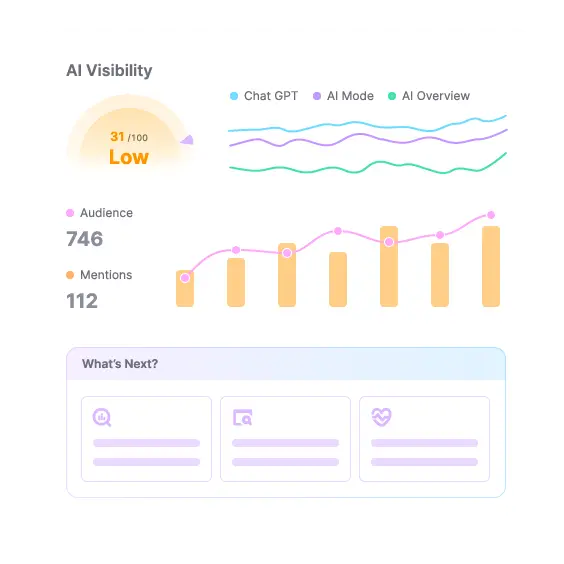
Start by seeing what actually happens when someone asks AI-powered tools questions related to your business, products, services, or expertise.

Test questions such as:

  • Who are the leading providers in this category?
  • What companies specialize in this problem?
  • What should someone look for before hiring this type of business?
  • What are the best options near this location?
  • How much does this service typically cost?
  • What companies are known for this expertise?

Pay attention to:

  • Whether your business appears
  • Which competitors appear
  • Which sources are cited
  • What information is accurate
  • What information is missing
  • Whether your brand is described consistently

Don't treat one query in one AI platform as a scientific conclusion.

Look for patterns.

Content & Question Coverage

One of the most useful parts of an AEO audit is identifying the questions your site does (or doesn't) answer.

Evaluate whether your content addresses:

  • Basic informational questions
  • Buying questions
  • Comparison questions
  • Pricing and cost questions
  • Process questions
  • Qualification questions
  • Objections
  • Industry-specific concerns
  • Local questions
  • Follow-up questions customers commonly ask

Then look at the quality of those answers.
Do they get to the point? Do they explain the reasoning?
Are they useful without requiring a sales call?
Do they contain firsthand expertise, examples, data, or evidence?

A content library full of articles isn't automatically useful.

Coverage matters. Clarity matters more.

Entity & Brand Clarity

AI-powered systems need to understand what they're looking at.

An audit should examine whether your website clearly establishes:

  • Your organization
  • Your location or service area
  • Your products or services
  • Your key people and experts
  • Your areas of expertise
  • Your relationships to other organizations
  • Your authors and publishers
  • Your important content topics

The information should also remain consistent across third-party sources.

If your website says one thing, Google Business Profile says another, LinkedIn says something else, and three directories still have your address from 2019, you're making machines (and customers) do unnecessary detective work.

Structured Data & Technical Health

Structured data can reinforce the meaning already present on a page.

An audit should check whether relevant markup is:

  • Present
  • Valid
  • Accurate
  • Consistent with visible content
  • Connected logically to related entities

Depending on the website, that might include:

  • Organization
  • LocalBusiness
  • Person
  • Article
  • Product
  • Event
  • BreadcrumbList
  • Other relevant Schema.org types

Technical fundamentals matter too.

Check:

  • Crawlability
  • Indexability
  • Internal linking
  • Canonical URLs
  • Mobile usability
  • Site performance
  • Rendering
  • Duplicate content
  • Page structure
  • Broken links
  • Redirects

AEO doesn't get a pass on technical SEO.

If machines can't reliably access the information, everything else gets harder.

Authority & Third-Party Signals

Your website can make claims about your business. The rest of the web helps establish whether anyone else agrees.

An AEO audit should examine external evidence such as:

  • Backlinks
  • Reviews
  • Media mentions
  • Industry directories
  • Associations
  • Professional profiles
  • Citations
  • Partner websites
  • Local business references
  • Original research
  • Author credibility

This is particularly important for local and expertise-driven businesses. A company saying:

“We are the leading expert.”

is marketing.

Other credible sources treating that company as an expert is evidence.

AI systems and people care about the difference.

Search Intent & Content Alignment

A page can rank and still fail the person searching.

That matters because visibility without relevance doesn't accomplish much.

Look at important pages and ask:

What question is this page actually answering?

Then compare that with:

What question should it be answering?

Common problems include:

  • Service pages that never explain the service
  • Articles targeting buying intent but offering only basic definitions
  • Landing pages stuffed with keywords instead of useful information
  • FAQs answering questions nobody actually asks
  • Multiple pages competing to answer the same question

An AEO audit should identify those disconnects. Not because AI search needs some special content format.

Because confused content is hard for everyone to use.
Measure More Than Rankings

Traditional rankings still matter.

They just aren't the whole picture anymore.

Useful AEO monitoring may include:

  • Organic visibility
  • Search impressions
  • Featured snippets
  • Branded search
  • AI referral traffic where identifiable
  • Mentions in AI-generated responses
  • Citations
  • Local visibility
  • Review growth
  • Referral sources
  • Conversion quality
  • Customer-reported discovery sources

The measurement challenge is real. AI discovery doesn't currently provide the clean attribution marketers would like. Shocking, we know.

That means organizations need to combine multiple signals instead of pretending one dashboard has all the answers.

What Does a Good AEO Audit Produce?

An audit shouldn't end with a 73-page PDF that gets admired once and buried in Google Drive.

It should produce priorities.

A useful output separates findings into categories such as:

Problems that prevent important content from being crawled, indexed, understood, or represented accurately.

Changes likely to improve clarity, authority, discovery, or customer usefulness.

Important questions, comparisons, or topics the site does not adequately address.

Areas where outside evidence, references, reviews, expertise, or reputation are weak.

Places where the organization lacks enough data to understand whether visibility is improving.

Research, editorial content, digital PR, tools, interviews, video, podcasts, and other assets that may strengthen topical authority over time.

Ai search visibility

Common AEO Audit Mistakes

  • Treating AI Search Like a Separate Internet
    AI search still depends heavily on information available across the web. SEO, content, authority, reputation, and technical accessibility still matter.
  • Auditing Only the Website
    Your digital footprint is bigger than your domain. Reviews, listings, media mentions, profiles, and third-party references should be part of the evaluation.
  • Obsessing Over Schema
    Structured data matters, but perfect markup cannot compensate for weak content or nonexistent authority.
  • Measuring One AI Platform
    ChatGPT, Google, Gemini, Perplexity, Copilot, and other tools may produce different answers. One platform is a sample. Not the market.
  • Chasing Mentions Without Business Context
    Being mentioned by an AI assistant is interesting. Being mentioned for questions that influence customer decisions is useful. Those are not the same thing.

Who Should Conduct an AEO Audit?

Local Businesses

Local companies should evaluate how accurately their business, services, location, reputation, and expertise appear across search and AI-powered discovery.

B2B Companies

Long buying cycles generate a lot of research questions.

An audit can reveal whether your content actually helps buyers understand the problem, evaluate options, and make decisions.

Professional Services

For attorneys, consultants, healthcare providers, financial professionals, contractors, and other expertise-driven companies, clear authorship and authority signals matter.

Ecommerce Brands

Product information, reviews, structured data, comparisons, third-party mentions, and merchant information all contribute to discoverability.

Publishers

Publishers should examine article structure, authorship, original reporting, citations, entity relationships, and how their content is being represented or referenced by AI systems.

A Practical AEO Audit Checklist

You don't need a giant software stack to start.

  1. Test Real Questions: Run the questions your customers actually ask through traditional search and several AI-powered platforms.
  2. Record What Appears: Track brands, sources, citations, answers, inaccuracies, and recurring patterns.
  3. Audit Your Content: Determine whether your website clearly answers those questions.
  4. Review Your Entities: Check whether your company, people, locations, products, services, and expertise are clearly identified.
  5. Check Structured Data: Validate important markup and make sure it matches the visible page.
  6. Review Technical SEO: Look for crawlability, indexation, performance, internal linking, canonical, and rendering issues.
  7. Audit External Authority: Review mentions, links, reviews, directories, media coverage, associations, and third-party profiles.
  8. Compare Competitors: Look at what businesses appearing more often than you are doing differently.
  9. Prioritize the Gaps: Don't fix everything at once. Fix what matters.
  10. Recheck Over Time: AI search is changing quickly. An audit is a snapshot not a lifetime warranty.

The Point of an AEO Audit Is Clarity

How chatgpt search works

The goal isn't to produce another score.

It's to answer useful questions:

  • Do search engines understand us?
  • Do AI systems have enough clear information about us?
  • Are we answering the questions customers actually ask?
  • Is our information consistent across the web?
  • Do credible sources support the claims we make about ourselves?
  • Are we visible for the questions that matter to the business?

Those answers give you something much more valuable than another green checkmark.

They tell you what to work on next.

Digital Marketing Insights & Tactics

Approach to ai

ChatGPT is Changing Online Search

ChatGPT and AI-powered search tools are reshaping how customers find businesses and why your site needs to adapt to stay ahead.

Chatgpt vs deepseek

ChatGPT vs. DeepSeek

ChatGPT & DeepSeek are reshaping online search, but how do they compare? Learn their key differences, strengths, and use cases in this AI search showdown.

Futureproof seo ai era

Future-Proofing Your SEO

Stay ahead of AI-driven search trends. Learn long-term SEO strategies that ensure visibility, engagement, and sustained conversions.

Rural business growth local trap

Rural Business Growth Stalled by Local Trap

Small-town businesses relying on word-of-mouth and social media are hitting a wall. Here’s how to break out and grow beyond your zip code.

Free marketing tools hero

Top 10 Free Small Business Marketing Tools

The top 10 free marketing tools every small business should use to streamline marketing, boost SEO, and grow your brand.

Rural business brochure website problem

Your Brochure Website Isn’t Working

Many rural businesses have websites that don’t convert. Here's how to spot if yours is stuck in brochure mode - and what to do about it.