On-Page SEO:
Make Every Page Easier to Find and Use

On-page SEO helps search engines understand your content and helps people decide whether it actually answers what they searched for.

On-Page SEO Starts With the Page, Not the Keyword

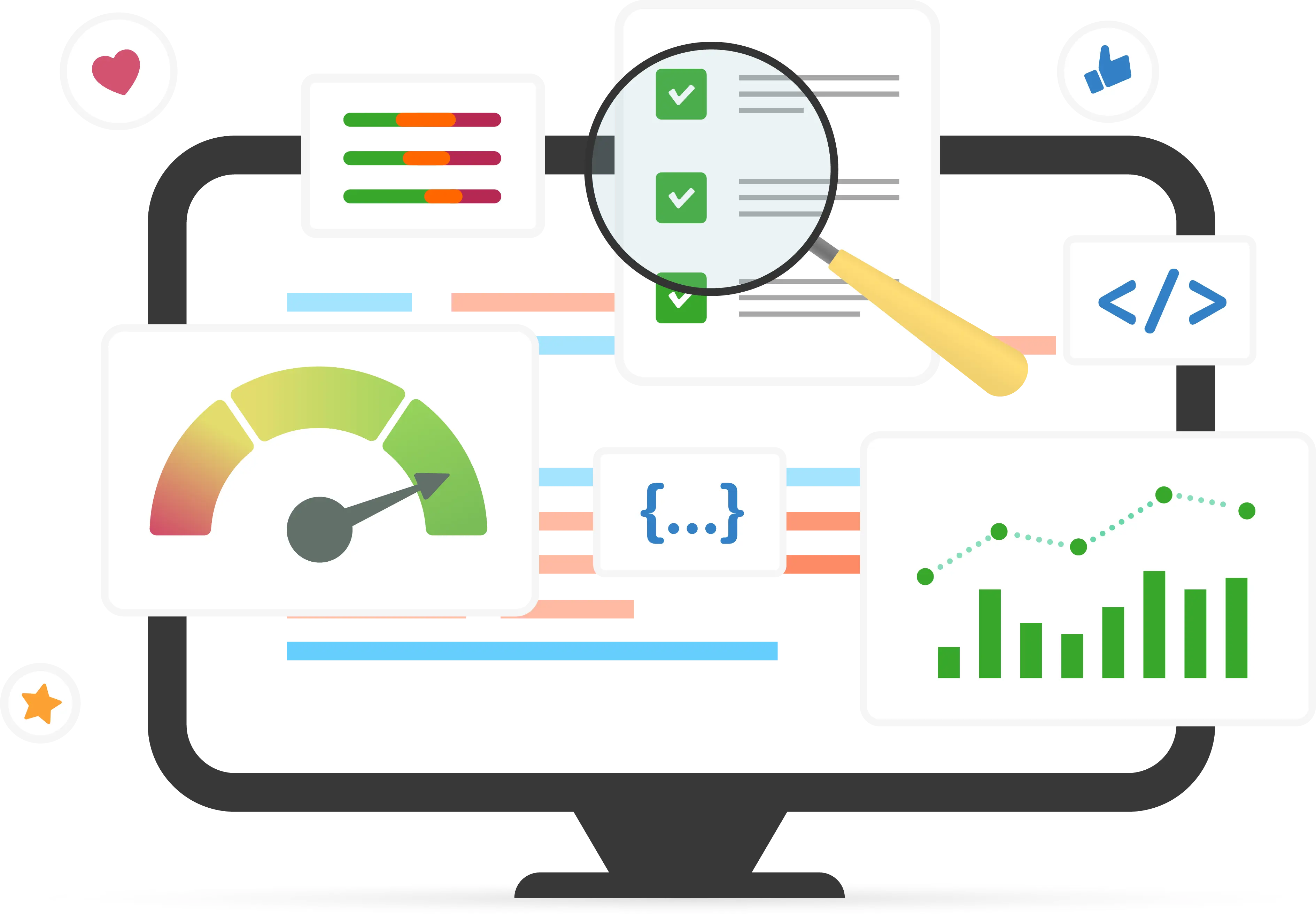
Seo marketing graphs

On-page SEO is the process of improving the content, structure, and HTML elements of an individual webpage so search engines can understand it and users can get what they came for.

That includes things like:

  • Search intent
  • Page topics
  • Titles
  • Headings
  • Content
  • Internal links
  • Images
  • URLs
  • Structured data
  • Calls to action

But here's where SEO often gets sideways.

A lot of businesses start with:
“What keyword should we rank for?”

A better starting point is:
“What is the person searching for, and what would make this page the best possible response?”

Keywords still matter. They just aren't the strategy.

Keyword Research: Understand the Language Behind the Search

Keyword research is really customer research with search data attached.

People reveal what they care about through the words they use.

A person searching:
“what does roof replacement cost?”

is asking a different question from:
“roofing contractor near me.”

One is researching. The other may be ready to hire. Both searches can matter, but the page serving each search should be different.

Look Beyond Search Volume

Search volume is useful. It isn't enough.

A keyword with 10,000 monthly searches can be worthless to a business if none of those searches represent potential customers.

Useful keyword research considers:

  • Search intent
  • Relevance to the business
  • Buying stage
  • Geographic intent
  • Competition
  • Specificity
  • Customer language
  • Business value

Sometimes the best search opportunity isn't the biggest keyword.

It's the one that attracts the right person at the right point in the decision.

Think in Topics, Not Isolated Keywords

Modern search engines don't need the exact same phrase repeated twelve times to understand a page. They evaluate the wider subject.

A useful page about commercial HVAC maintenance might naturally discuss:

  • Preventive maintenance
  • Service schedules
  • Energy efficiency
  • Equipment lifespan
  • Repair costs
  • Seasonal inspections
  • Filters
  • Rooftop units
  • Commercial buildings

Those related concepts help establish what the page is actually about.

The goal is not keyword density. The goal is topic clarity.

Search Intent: Match the Page to the Question

Search intent describes what someone is trying to accomplish.

Most searches fall somewhere around four broad categories.

Informational

The user wants to learn something.

Examples:

  • What is technical SEO?
  • How does a heat pump work?
  • Why is my foundation cracking?

Commercial Research

The user is comparing options before making a decision.

Examples:

  • Best CRM for small business
  • SEO vs. AEO
  • Tankless vs. traditional water heater

Transactional

The user is closer to taking action.

Examples:

  • Buy commercial generator
  • Schedule HVAC repair
  • Get roofing estimate

Navigational

The user is trying to reach a particular brand, business, or site.

Examples:

  • Digital Rebel Media
  • Semrush login
  • Lowe's Wichita Falls

A page optimized for the wrong intent can struggle even if everything else looks technically perfect.

You can have great headings, great metadata, perfect schema, and a pristine Lighthouse score.

If the page answers the wrong question, you've polished the wrong thing.

A page optimized for the wrong intent can struggle even if everything else looks technically perfect. You can have great headings, great metadata, perfect schema, and a pristine Lighthouse score. If the page answers the wrong question, you've polished the wrong thing.

Content: Answer the Question Before You Try to Impress Anyone

Good on-page SEO content is useful before it is optimized.

The page should give the visitor enough information to understand the subject and make progress.

That may include:

  • Direct answers
  • Definitions
  • Examples
  • Costs
  • Timelines
  • Comparisons
  • Pros and cons
  • Processes
  • Risks
  • FAQs
  • Original observations
  • Firsthand experience
  • Supporting sources

Not every page needs all of those. The page should include what the topic requires.
Depth Is Not the Same as Length

There is no magic word count. A 500-word page can completely answer a narrow question. A 3,000-word article can spend twenty paragraphs avoiding it.

Search engines aren't handing out trophies for endurance writing. Cover the subject thoroughly enough to satisfy the intent. Then stop.

Originality Matters More Than Volume

The web doesn't need another article that says:
“SEO is important because SEO helps your SEO.”

Useful content adds something. That could be:

  • Experience
  • An opinion
  • Original research
  • A useful framework
  • Real examples
  • Better explanations
  • Industry-specific insight
  • Local knowledge
  • Data
  • A clearer answer

If a page can be recreated by summarizing the first five search results, it probably isn't adding much to the conversation.

Titles and Headings: Make the Topic Obvious

Titles and headings help users and search engines understand the hierarchy of a page.

They aren't places to stuff keywords. They're signposts.

Title Tags

The title tag commonly influences how a page is represented in search results.

A useful title should:

  • Describe the page accurately
  • Include the primary subject
  • Differentiate the page from others
  • Give the searcher a reason to care

Bad:

SEO Services | SEO Company | Best SEO Agency | SEO Experts

Better:

On-Page SEO: How to Optimize Content & Page Structure

One sounds like someone discovered commas. The other tells you what you're getting.

H1

The H1 should clearly communicate the primary topic of the page.

Usually, one clear H1 is enough.

It does not have to be identical to the title tag, but the two should describe the same subject.

H2s and H3s

Subheadings organize the content into logical sections. They help readers scan. They also make relationships between ideas clearer.

A good hierarchy looks like:

H1: On-Page SEO
H2: Keyword Research
H3: Search Volume
H3: Search Intent
H2: Internal Linking

Not:

H1: On-Page SEO
H4: Keywords
H2: Whatever Came Next

HTML shouldn't require archaeology.

Meta Descriptions: Write for the Click, Not the Algorithm

A meta description is a short description of a page that search engines may use in search results. It isn't generally something to obsess over as a direct ranking lever. Its practical value is communication.

A useful meta description tells the searcher:

  • What the page covers
  • Why it may be useful
  • What they can expect

Example:

Learn how on-page SEO uses search intent, content, titles, headings, internal links, images, and page structure to improve organic search performance.

Clear. Specific. No “revolutionary solutions.” Everybody wins.

Internal Linking: Connect the Information

Internal links point from one page on your website to another.

They're one of the most useful (and most neglected) parts of on-page SEO.

Internal linking helps search engines discover pages and understand relationships between them.

It also helps visitors continue their research.

A useful structure might look like:
SEO Overview → On-Page SEO → Keyword Research
or:
Local SEO → Google Business Profile → Reviews
or:
AEO → Structured Data → Entity Authority

That creates a connected information system rather than a pile of pages sharing a domain name.

Use Descriptive Anchor Text

Anchor text should give context about where the link leads.

Better:
Learn more about technical SEO

Worse:
Click here

“Click here” tells search engines and users approximately nothing.

URLs: Keep Them Clear

URLs should generally be simple, descriptive, and stable.

For example:
/martech/seo/on-page

is easier to understand than:
/index.php?pageid=9427&cat=19

A useful URL usually:

  • Reflects the topic
  • Avoids unnecessary parameters
  • Uses readable words
  • Fits logically into the site's structure
  • Remains stable over time

Changing URLs without a reason creates work. Changing them without redirects creates a different kind of work.

Images Are Content Too

Images can improve understanding, demonstrate concepts, and make pages easier to consume. They also need basic optimization.

Consider:

  • Useful filenames
  • Appropriate image dimensions
  • Compression
  • Responsive images
  • Alt text
  • Captions where helpful
  • Modern formats when practical

Alt Text

Alt text describes the image when it can't be seen. Its first job is accessibility. If an image communicates information, describe what matters.

Bad:
SEO image keyword digital marketing SEO service

Better:
Google Search Console chart showing growth in organic clicks

Write for people. The machines will survive.

Structured Data Can Add Context

Structured data is machine-readable information that can help search engines understand entities and relationships on a page.

Depending on the content, useful schema types may include:

  • Article
  • Organization
  • Person
  • LocalBusiness
  • Product
  • Event
  • BreadcrumbList

Structured data should describe what's actually on the page. It shouldn't be used to claim things the visible content doesn't support.

Schema is clarification. Not decoration.

On-Page SEO and Conversion Should Work Together

Ranking is not the end of the customer journey. It's the beginning of the visit. A page can rank well and still be terrible at producing business.

That's why on-page SEO should also consider what happens after the click.

Can the visitor:

  • Understand the offer?
  • Find the answer?
  • Navigate easily?
  • Trust the information?
  • Determine whether the business fits?
  • Take the next logical step?

That might mean:

  • Reading another article
  • Comparing options
  • Viewing pricing
  • Calling the business
  • Requesting a quote
  • Booking an appointment
  • Buying a product

SEO shouldn't create traffic that gets lost on arrival. A well-optimized page connects search intent → useful information → next action. That is where visibility starts becoming revenue.

What About AI Search?

Many of the same practices that make a page easier for traditional search engines to understand also make information easier for AI-powered systems to process.

  • Clear headings.
  • Direct answers.
  • Defined entities.
  • Logical structure.
  • Useful internal links.
  • Accurate structured data.
  • Strong supporting evidence.
  • Original expertise.

That doesn't mean on-page SEO and AEO are identical. But they increasingly overlap.

The goal is becoming less about “put the keyword here” and more about:
Make the page unambiguous, useful, credible, and easy to interpret.

That's a better standard anyway.

Common On-Page SEO Mistakes

Repeating the same phrase unnaturally doesn't make a page more relevant. It makes it irritating.

Search engines exist to help users find information.

If the content annoys the user, you've missed the larger objective.

A service page won't always satisfy an informational query.

A beginner's guide won't always satisfy someone ready to buy.

Match the page to the need.

Creating separate pages for tiny keyword variations can result in several weak pages competing with each other.

Sometimes one strong page is better than six nearly identical ones.

Important pages buried three clicks deep with few internal links are harder for users and search engines to discover.

They're useful. They're not sorcery.

Not every page deserves the same effort.

Prioritize pages that support important topics, customer questions, products, services, and business outcomes.

A Practical On-Page SEO Checklist

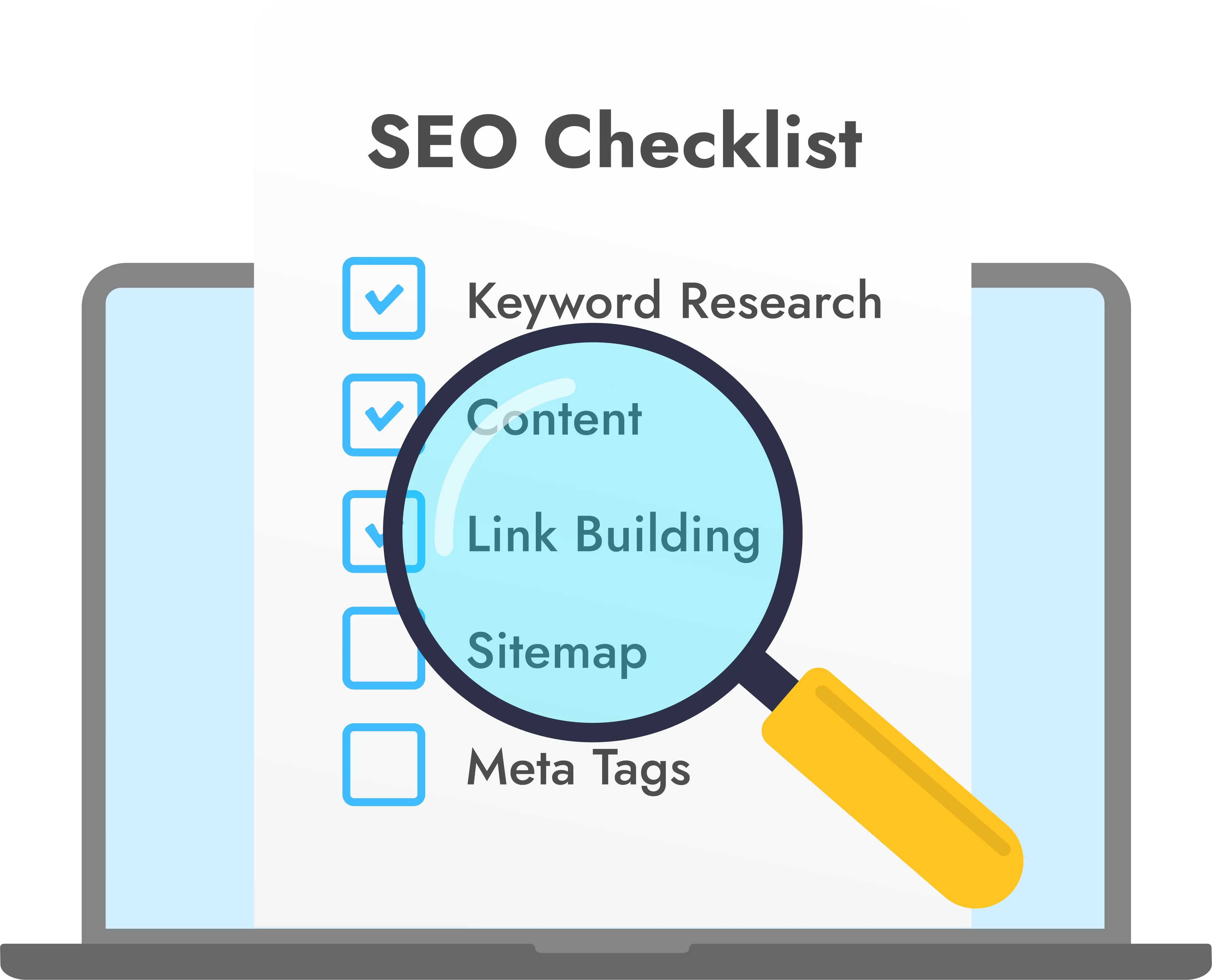
Seo checklist

Before publishing or updating an important page, ask:

  1. What search intent does this page serve?
  2. Is the main topic obvious?
  3. Does the title accurately describe the page?
  4. Does the H1 clearly state the subject?
  5. Do headings organize the information logically?
  6. Does the content answer the primary question early?
  7. Does the page cover important supporting questions?
  8. Is the content original or genuinely useful?
  9. Are important related pages internally linked?
  10. Is the URL clear and stable?
  11. Are images optimized and accessible?
  12. Does structured data accurately describe the content?
  13. Is there a clear next step for the visitor?
  14. Can the page's performance be measured?

If you can't answer number one, don't worry about number twelve yet.

How Do You Measure On-Page SEO?

Start with search visibility:

  • Impressions
  • Organic clicks
  • Rankings
  • Click-through rate
  • Query coverage

Then look at what happens after the visitor arrives:

  • Engagement
  • Conversion rate
  • Calls
  • Leads
  • Purchases
  • Appointments
  • Assisted conversions
  • Revenue

That's the piece SEO conversations often skip.

A page ranking from position 12 to position 4 sounds great. If it generates no qualified business, the victory is mostly decorative.

FAQ

On-page SEO is the process of improving individual webpages so search engines can better understand them and users can more easily find the information they need. It includes content, headings, titles, internal links, URLs, images, structured data, and other page-level elements.

On-page SEO focuses on elements within your own website. Off-page SEO deals with external signals such as backlinks, media mentions, reviews, citations, and other forms of third-party authority.

The most important elements usually include search intent, useful content, title tags, headings, internal links, page structure, URLs, images, and relevant structured data.

There is no useful universal keyword-density target. Use the terminology necessary to cover the topic naturally and clearly rather than trying to hit an arbitrary percentage.

There is no fixed timeline. Search engines must crawl and reevaluate the page, and results depend on competition, authority, technical condition, content quality, and the significance of the changes.

Yes, when optimization also improves clarity, relevance, navigation, trust, and the next step for the visitor. More rankings do not automatically create more conversions, but a better page can support both.

We use industry-leading SEO tools such as Google Search Console, SEMrush, and Screaming Frog to analyze, audit, and optimize your web pages for peak performance.

Common tools include Google Search Console, analytics platforms, keyword research tools, crawling software such as Screaming Frog, and SEO platforms such as Semrush. The tool can identify problems. Someone still has to decide what matters.

Yes. Location-specific content, clear service areas, internal links, business information, and relevant structured data can support local visibility alongside Google Business Profile, reviews, citations, and other local SEO factors.

Many on-page SEO improvements are accessible to business owners, marketers, writers, and developers who understand the basics. More complex sites may require technical or strategic expertise, but there is nothing about writing a useful title or answering a customer question that requires ceremonial robes.

Keep Exploring Search Engine Optimization (SEO)

Digital Marketing Insights & Tactics

Rural business growth local trap

Rural Business Growth Stalled by Local Trap

Small-town businesses relying on word-of-mouth and social media are hitting a wall. Here’s how to break out and grow beyond your zip code.

Measure website success

Measure Your Website’s Success

Not sure if your website is working? Learn 3 simple steps to measure traffic, track conversions, and improve your site’s performance with confidence.

Chatgpt vs deepseek

ChatGPT vs. DeepSeek

ChatGPT & DeepSeek are reshaping online search, but how do they compare? Learn their key differences, strengths, and use cases in this AI search showdown.

Google disappearance lie

Google Disappearance Lie

Exposing the agency myth: stopping SEO services won’t erase you from Google. Learn the truth and protect your business from scare tactics.

Website collecting dust bg

Stop Letting Your Website Collect Dust

Why your website should be more than just an online brochure. Learn how SEO & AEO can turn it into a powerful growth tool.

Rethink hiring friend relative build website

Hiring a Friend to Build Your Website?

Hiring a friend or relative for your website may save money, but lack of expertise, SEO, and support can hurt your business in the long run.