
AI, DIY CRMs, and the Death of “Good Enough” Marketing

Chris Martin
Founder, Digital Rebel Marketing
Let’s get something straight.
AI isn’t killing marketing jobs.
And SaaS isn’t dead.
What is dying is lazy thinking.
You’ve probably seen the same flood of content:
- “AI will replace your team”
- “Build your own CRM and ditch HubSpot”
- “SaaS is over”
It sounds bold. It gets clicks.
It’s also wildly incomplete.
Because none of those conversations are actually about tools.
They’re about something much more:
Most businesses don’t have a system problem.
They have a clarity problem.
The Rise of the “Build It Yourself” Crowd

There’s a growing trend of founders spinning up “custom CRMs” using tools like OpenClaw.
On paper, it sounds like a power move:
- Full control
- Lower cost
- AI baked in
- No vendor lock-in
But here’s what usually happens in reality:
You don’t get a CRM.
You get a project.
And that project quietly turns into:
- Inconsistent data
- Broken workflows
- Sales teams ignoring the system entirely
- Reporting that changes depending on who’s looking at it
Congratulations. You didn’t escape SaaS.
You just built your own version of its problems.
Why This Is Happening Right Now
This trend isn’t random.
It’s being driven by three things:
1. Distrust in Vendors
A lot of businesses got burned.
They bought HubSpot or Salesforce…
and nobody set it up correctly.
So now they assume:
“The tool doesn’t work.”
When the real issue was:
“The strategy didn’t exist.”
2. The Illusion of Control
Building your own system feels empowering.
But control without structure is chaos.
If your sales process isn’t defined, your pipeline stages are fuzzy, and your attribution is guesswork…
Owning the system doesn’t fix that.
It just makes the mess harder to unwind later.
3. AI Hype Without Context
AI can generate workflows, write code, and automate tasks.
What it can’t do (yet):
- Define your ideal customer clearly
- Align your sales and marketing teams
- Decide what actually drives revenue in your business
AI accelerates execution.
It does not replace decision-making.
The Real Problem

Here’s where most of these conversations fall apart.
Whether you’re using:
- HubSpot
- Salesforce
- OpenClaw
- Or a spreadsheet duct-taped together
If you don’t have:
- Defined lifecycle stages
- Clean data structure
- Clear attribution
- Alignment between marketing and sales
Then your “CRM” is just a very expensive guessing machine.
What Actually Drives Growth
(Hint: It’s Not the Tool)
At Digital Rebel, we see this constantly.
Companies don’t fail because they picked the wrong platform.
They fail because:
- Leads aren’t tracked consistently
- Marketing doesn’t know what sales closes
- Sales doesn’t trust the data
- Leadership has zero visibility into what’s working
So they chase a new tool.
And the cycle repeats.
The Shift: From Tools to Systems
This is where the market is going, whether people like it or not.
The winners in the AI era aren’t:
- The companies with the most tools
- The companies with the most automation
They’re the ones with:
- Clear processes
- Aligned teams
- Systems built around revenue, not activity
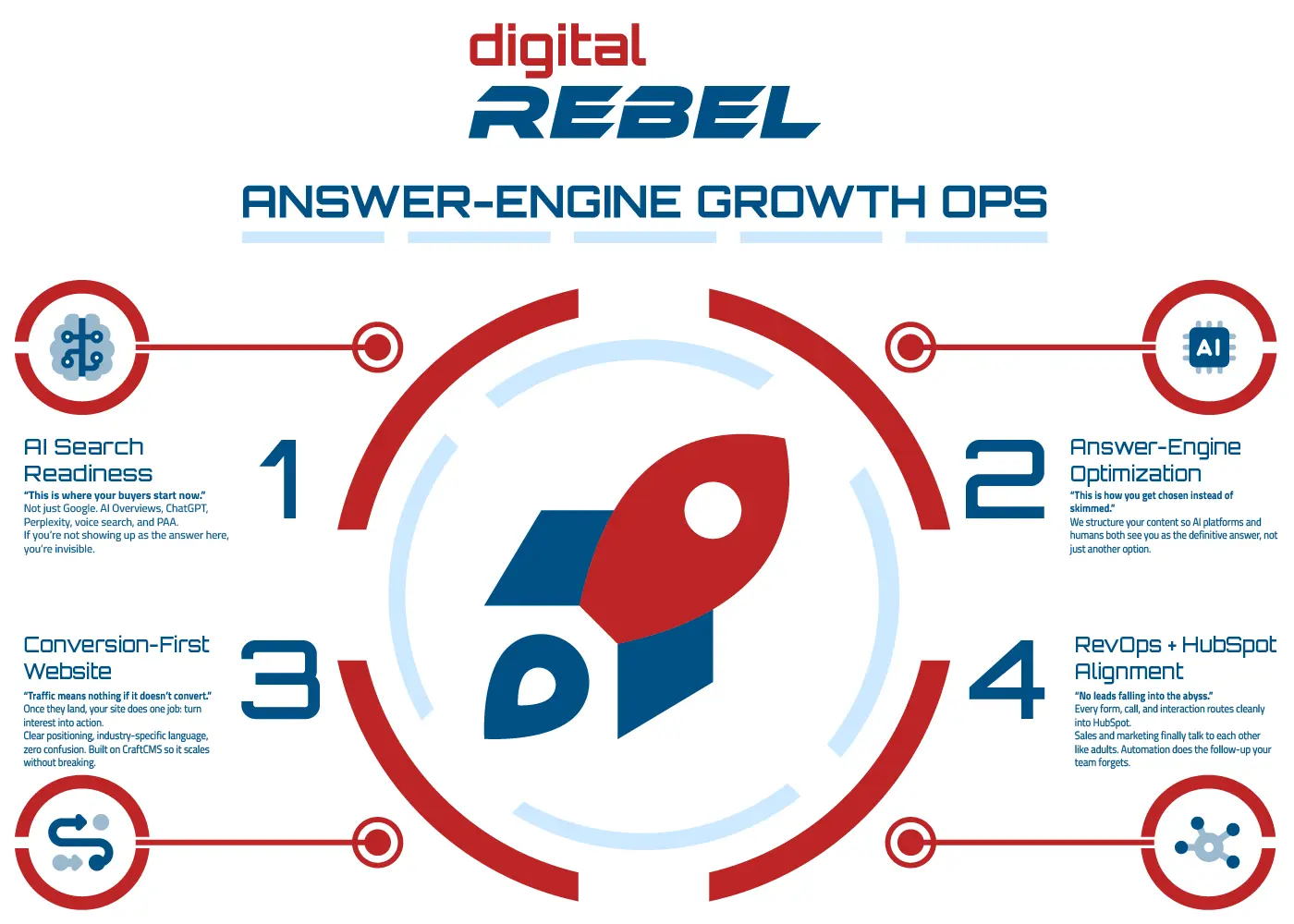
We call this Answer-Engine Growth Ops.
Because it’s not about being visible.
It’s about being the definitive answer and converting that attention into pipeline.
So… Should You Build Your Own CRM?

Here’s the honest answer.
If you:
- Have a dedicated dev team
- Have already nailed your sales process
- And need something truly custom
Go for it.
But if you’re like most founder-led businesses?
You don’t need to build a CRM.
You need to fix:
- Your pipeline structure
- Your data flow
- Your conversion points
- Your visibility into revenue
Because without those…
It doesn’t matter what system you use.
The Bottom Line

AI isn’t replacing marketers.
DIY tools aren’t replacing platforms.
But both are exposing a hard truth:
“Good enough” marketing doesn’t survive in a system-driven, AI-powered world.
You don’t win by having more tools.
You win by having better alignment, better data, and better decisions.
Ready to Stop Guessing?
If your CRM feels more like a black hole than a growth engine…
It’s not the software.
It’s the system behind it.