
Nobody Owns the Website (And That’s Why It Keeps Failing)

Chris Martin
Founder, Digital Rebel MarketingIn Part 1, we talked about the symptom.
Municipal, Chamber, and Economic Development websites feel outdated, unclear, and strangely ineffective at promoting the very places they represent.
Now let’s talk about the cause.
Because this isn’t a design problem. And it’s not a talent problem.
It’s an ownership problem.
And almost no one wants to talk about it.
The Website Lives in a No-Man’s Land

Ask a simple question inside most municipalities or Chambers:
“Who owns the website?”
You’ll usually get a pause.
Marketing thinks IT manages it.
IT thinks Communications updates it.
Communications assumes Economic Development drives the content.
Economic Development is busy doing actual economic development.
So the website exists in a shared responsibility zone, which sounds collaborative but functions like a vacuum.
When everyone touches it, no one is accountable for outcomes.
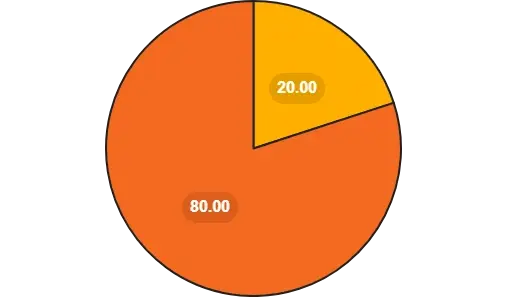
20% of government websites contain broken links
Shared Responsibility Produces Predictable Results
This is how websites quietly decay, even after redesigns.
- Pages get added, but never removed.
- Programs expire, but stay published.
- Navigation grows, but clarity shrinks.
- Content gets approved, but never measured.
It’s why studies consistently show that over 20 percent of government websites contain broken links, with local sites being the worst offenders. Broken links aren’t just technical debt. They’re visible evidence that no one is stewarding the system.
And if no one is stewarding it, the site can’t evolve.
Committees Don’t Own Outcomes. They Avoid Blame.

Most municipal websites are overseen by committees.
Committees are great at protecting interests.
They’re terrible at making decisions.
Every department wants representation. Every initiative wants visibility. No one wants to remove anything because someone, somewhere, might need it later.
So instead of prioritization, you get accumulation.
Instead of clarity, you get clutter.
And instead of a website designed to guide decisions, you get one designed to avoid complaints.
That’s how you end up with sites that technically “work” but don’t actually do anything.
Redesigns Feel Productive. They’re Usually a Reset Button.
Here’s the trap a lot of organizations fall into.
The website feels outdated, so they redesign it.
New colors. New photos. New templates. Big reveal.
For a few months, it feels better.
Then nothing changes.
Because the redesign didn’t fix ownership. It just gave the same system a fresh coat of paint.
Without clear ownership:
- No one is accountable for performance
- No one is responsible for pruning content
- No one is empowered to say “this doesn’t belong here anymore”
So the site slowly drifts back to where it started. Just with newer fonts.
Ownership Isn’t About Control. It’s About Accountability.

When people hear “website ownership,” they often imagine gatekeeping or bottlenecks.
That’s not what’s missing.
What’s missing is someone who is responsible for outcomes, not just updates.
Someone who can answer questions like:
- What is this website supposed to accomplish this year?
- Who is it primarily for?
- What actions should it drive?
- What content is helping, and what is just taking up space?
If no one can answer those questions clearly, the website will always default to being a digital filing cabinet.
This Is Why the Website Never Feels Strategic
Here’s the hard truth.
A website without ownership cannot be strategic, no matter how good the design is.
Strategy requires trade-offs.
Trade-offs require authority.
Authority requires ownership.
Without that chain, the website becomes a reflection of internal politics instead of an engine for external growth.
And that’s why so many municipal sites feel frozen in time. Not because people don’t care, but because no one is empowered to lead.

What Comes Next
Fixing ownership is necessary, but it’s not sufficient.
Because even when organizations assign responsibility, many still run into a second, less obvious problem: the tools they’re using quietly work against them.
In Part 3, we’ll talk about the platform issue most municipalities never question, and why “non-profit website builders” often limit growth more than they enable it.
A Quick Reality Check
Before moving on, ask yourself one honest question:
If your website were suddenly unavailable, who would feel responsible for fixing the problem, and who would be accountable for the impact?
If the answer is unclear, that’s the issue.
Part 3 digs into how platform choices and “easy” tools quietly reinforce this problem and make strategic growth harder than it needs to be.